On the OLED line, drying isn’t a pause. It’s a control point.
แถวการผลิต OLED การอบแห้งไม่ใช่จุดหยุดชั่วคราว แต่เป็นจุดควบคุม
Wafers come out of rinse and need a stable surface before lithography. Under-dry the photoresist and you get edge bead, then overlay starts drifting. Bake unevenly and linewidth distribution spreads out—yield walks away. We built our infrared drying lamps to knock that variability out of the process.
หลังจากที่แผ่นเวเฟอร์ผ่านกระบวนการล้าง จะต้องมีพื้นผิวที่เสถียรก่อนขั้นตอนลิโทกราฟี หากอบแห้งฟิล์มโฟโตเรซิสต์ไม่เพียงพอจะเกิดขอบฟิล์มหนา (edge bead) ทำให้การจัดตำแหน่งเลเยอร์เลื่อนไหลไป ขณะที่การอบไม่สม่ำเสมอจะส่งผลให้ความกว้างเส้นฟิล์มแปรผัน ส่งผลต่ออัตราผลิตที่ลดลง เราจึงออกแบบหลอดอบแห้งอินฟราเรดเพื่อกำจัดความผันผวนในกระบวนการนี้
What matters, technically
สิ่งที่สำคัญในทางเทคนิค
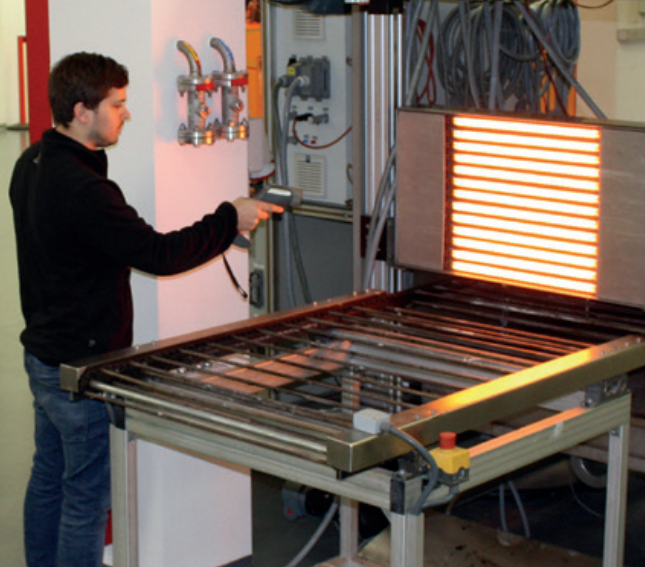
We run short-wave infrared emitters with fast-response filaments and quartz optics, dumping energy straight into the photoresist layer. The system holds wafer-level temperature uniformity within ±0.1°C across the bake field, so the thermal budget stays consistent lot to lot.
เราใช้เครื่องปล่อยคลื่นอินฟราเรดระยะสั้นที่มีไส้หลอดตอบสนองเร็วและเลนส์ควอตซ์ เพื่อส่งพลังงานตรงเข้าสู่ชั้นโฟโตเรซิสต์ ระบบควบคุมอุณหภูมิที่เวเฟอร์รักษาความสม่ำเสมอได้ภายใน ±0.1°C ทั่วพื้นที่อบ ทำให้งบประมาณพลังงานความร้อนคงที่ในแต่ละชุดผลิต
Soft bake profiles repeat inside a tight window, and hard bake transitions are clean—no overshoot. Cleanroom compatibility is built in: low outgassing materials, sealed housings, and controlled airflow paths keep particle generation near zero.
โปรไฟล์อบแบบอ่อนทำซ้ำได้ในช่วงเวลาที่จำกัด ส่วนการอบแบบหนักมีการเปลี่ยนผ่านอย่างชัดเจนโดยไม่มีการเกินอุณหภูมิ วัสดุและโครงสร้างออกแบบมาให้เหมาะกับห้องสะอาด: ใช้วัสดุที่ปล่อยมลพิษต่ำ ตัวเครื่องปิดผนึก และควบคุมเส้นทางลมอย่างแม่นยำ เพื่อลดการเกิดฝุ่นละอองให้ใกล้ศูนย์
Why it fits OLED
เหตุผลที่เหมาะกับ OLED
OLED stacks are thin, sensitive, and the schedule doesn’t forgive. The lamps cut drying and bake time while keeping the profile intact, so cycle time drops without hurting film thickness control.
ชั้น OLED มีความบางและไวต่อการเปลี่ยนแปลง และตารางเวลาผลิตเข้มงวด หลอดอบช่วยลดเวลาการอบและการอบแห้งโดยไม่เปลี่ยนโปรไฟล์ฟิล์ม ทำให้เวลาวงรอบลดลงโดยไม่กระทบการควบคุมความหนาของฟิล์ม
We focus the heat where it’s needed, not into the chamber walls, so energy use comes down. Reliability is about uptime: units run 5,000+ hours with less than 5% output drop—fewer interrupts, fewer preventive swaps.
เราเน้นความร้อนที่บริเวณโฟโตเรซิสต์โดยตรง ไม่ใช่ไปตีผนังห้องอบ จึงช่วยลดการใช้พลังงาน ความน่าเชื่อถือขึ้นกับเวลาทำงานต่อเนื่อง หน่วยทำงานได้เกิน 5,000 ชั่วโมงโดยลดกำลังการผลิตไม่เกิน 5% หมายถึงมีการหยุดงานระหว่างกลางน้อยและเปลี่ยนอุปกรณ์เชิงป้องกันบ่อยน้อยลง
What you need to know
สิ่งที่ต้องทราบ
Installation comes down to matching the lamp footprint to the track port and aligning the irradiance profile to the wafer size. Lamp output is sensitive to spacing—if the gap is outside the recommended window, uniformity suffers.
การติดตั้งจะต้องให้ขนาดฐานหลอดตรงกับพอร์ตส่งขนานและปรับโปรไฟล์การฉายแสงให้เหมาะสมกับขนาดแผ่นเวเฟอร์ กำลังงานของหลอดขึ้นกับระยะห่างอย่างมาก หากระยะห่างเกินกว่าช่วงที่กำหนด ความสม่ำเสมอจะลดลง
Expect a short commissioning run to tune the recipe. Once it’s calibrated, the process holds steady with routine metrology checks.
ควรเตรียมระยะเวลาการสตาร์ทสั้นๆ สำหรับปรับจูนสูตร เมื่อได้ค่าสมดุลแล้ว กระบวนการจะคงที่โดยตรวจวัดสม่ำเสมอตามมาตรฐานที่ตั้งไว้ได้ต่อเนื่อง