
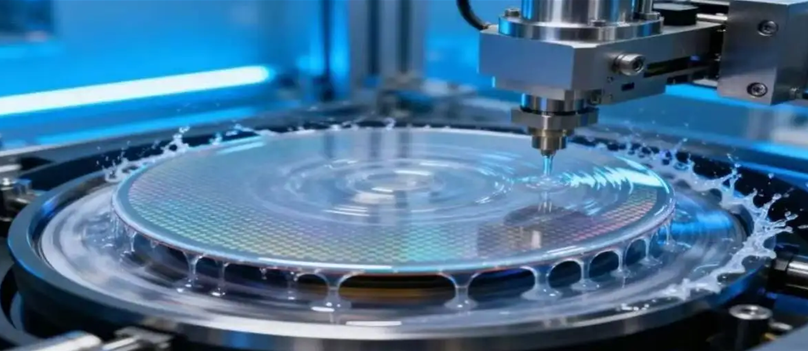
On the fab floor, a soft bake at 90°C with ±0.5°C drift will move CD uniformity and cost you yield. Temperature isn’t a background knob—it defines how the photoresist behaves, how it adheres, and whether the pattern holds up downstream. When thermal control wanders, you see it fast: defects on inspection, and more rework piling up. What matters under the hood We built the precision infrared heater around NIR sources, dumping energy straight into the silicon and the photoresist stack. Across the bake surface, we target wafer-level uniformity of ±0.1°C, and the setpoint settles in seconds, not minutes. Cleanroom Class 1–100 is supported with low-outgassing materials and a particle-controlled design, holding at zero particle generation once you’re in steady state. The controller keeps a clean line on thermal budget, with repeatability that plays nicely with statistical process control. Why this lands in lithography Consistent soft bake and hard bake profiles shave cycle time and cut scrap. You get tighter CD control, fewer footing and scum defects, and a dose window you can count on. Energy use drops because the NIR element heats on demand—minimal warm-up, no extra chamber mass to fight. Uptime is the real scorecard: these units run 24/7 with zero unplanned downtime in production, and service stays on scheduled preventive maintenance, not emergency callouts. Here is what to watch for Integration is straightforward, but the heater needs matched mounting surfaces and stable voltage to keep that ±0.1°C uniformity window. Commission the thermal coupling to the chuck, and make sure the controller sees a clean, low-noise sensor path. If your wafer has high emissivity variation across the surface, you may need a bit of zone compensation tuning. We provide the interface specs and calibration routines so the install lands in spec.