
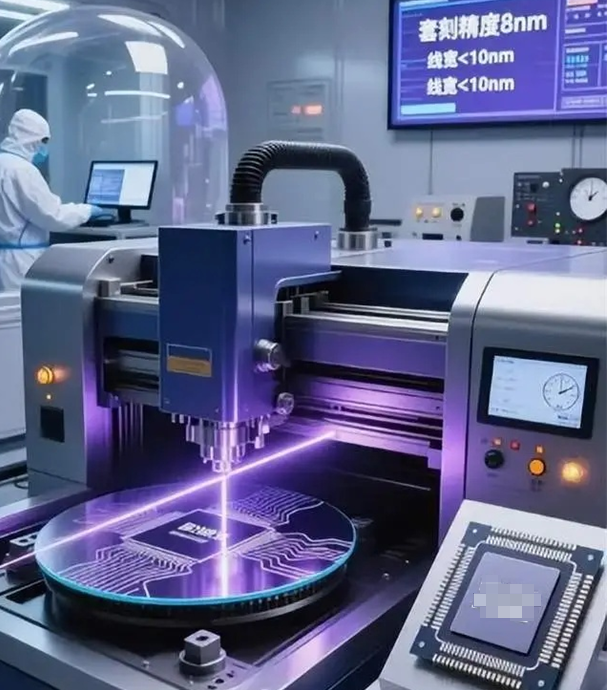
On the fab floor, a 0.1°C drift during photoresist bake can shift critical dimensions by nanometers. That’s not a “tolerance,” that’s scrap. We built our short wave infrared lamps to take that uncertainty out of the equation, so wafer-level uniformity is a spec, not a hope. The core is short wave infrared, chosen because it heats volumetrically, fast, with low thermal inertia. Peak emission lines up with how common photoresists absorb, so the energy goes into the film, not the carrier. You’re getting wafer-level uniformity within ±0.1°C across 150/200/300 mm substrates, and setpoint stability under 0.5°C during the soak. The quartz envelope and reflector geometry are set up to keep particle generation down, so cleanroom particle counts stay steady in Class 1–100 environments. Output holds up over 5,000+ hours, with less than 5% intensity drop. In lithography cells, that means tighter soft bake and hard bake windows, fewer defects, and CD control you can bank on. Faster ramp and cool cycles boost throughput without adding thermal budget. Energy use drops because the lamp heats the target, not the chamber around it. Reliability is built for 24/7 operation, and the modules are hot-swappable so an unplanned stop doesn’t shut the line down. Installation is straightforward on standard tracks, but pay attention to optical alignment and EMI shielding near sensitive stages. Tie into your existing temperature controllers and interlocks, then validate the bake profile against your resist stack. Plan on periodic reflector inspections and quartz cleaning. That’s how you keep uniformity consistent over years, not just quarters.