
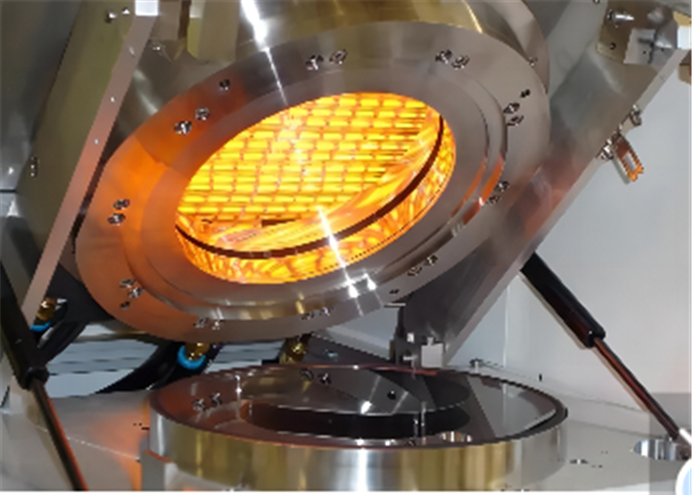
On the lithography floor, a 0.2°C swing during photoresist bake is enough to wreck linewidth control and take yield with it. Conventional hotplates fight to keep across-wafer uniformity while staying inside the thermal budget. Zoned infrared heating is the straightforward fix. What matters under the hood Our zoned IR module uses independently controlled NIR elements to map temperature in discrete zones, correcting edge-to-center gradients on the fly. You get ±0.1°C steady-state uniformity across the wafer, and setpoint repeatability tight enough to keep critical bake steps in spec. The hardware is built for cleanroom Class 1–100: low-outgassing materials, sealed optics, and a path designed to minimize particles. Expect zero particle generation during bake, and long-term thermal stability that keeps critical dimension performance consistent. Why it holds up in production This module delivers process control you can measure. Soft bake and hard bake profiles repeat with minimal drift, so rework drops and line yield climbs. Thermal response is fast, so you can shorten cycle times without losing profile fidelity. Energy goes only where it’s needed, which lowers operating cost per lot. Fewer scrap wafers, fewer alarms, and a bake profile that survives 24/7 operation without unplanned interruptions. The practical details Installation comes down to matching the chamber footprint and tying into your existing gas and power interfaces. We provide the interface drawings and validation protocols. The module works with standard wafer handling, but it’s not rated for direct immersion or wet-process exposure. Plan a short commissioning run to lock in your site-specific bake recipes and confirm the uniformity map across your product mix.