
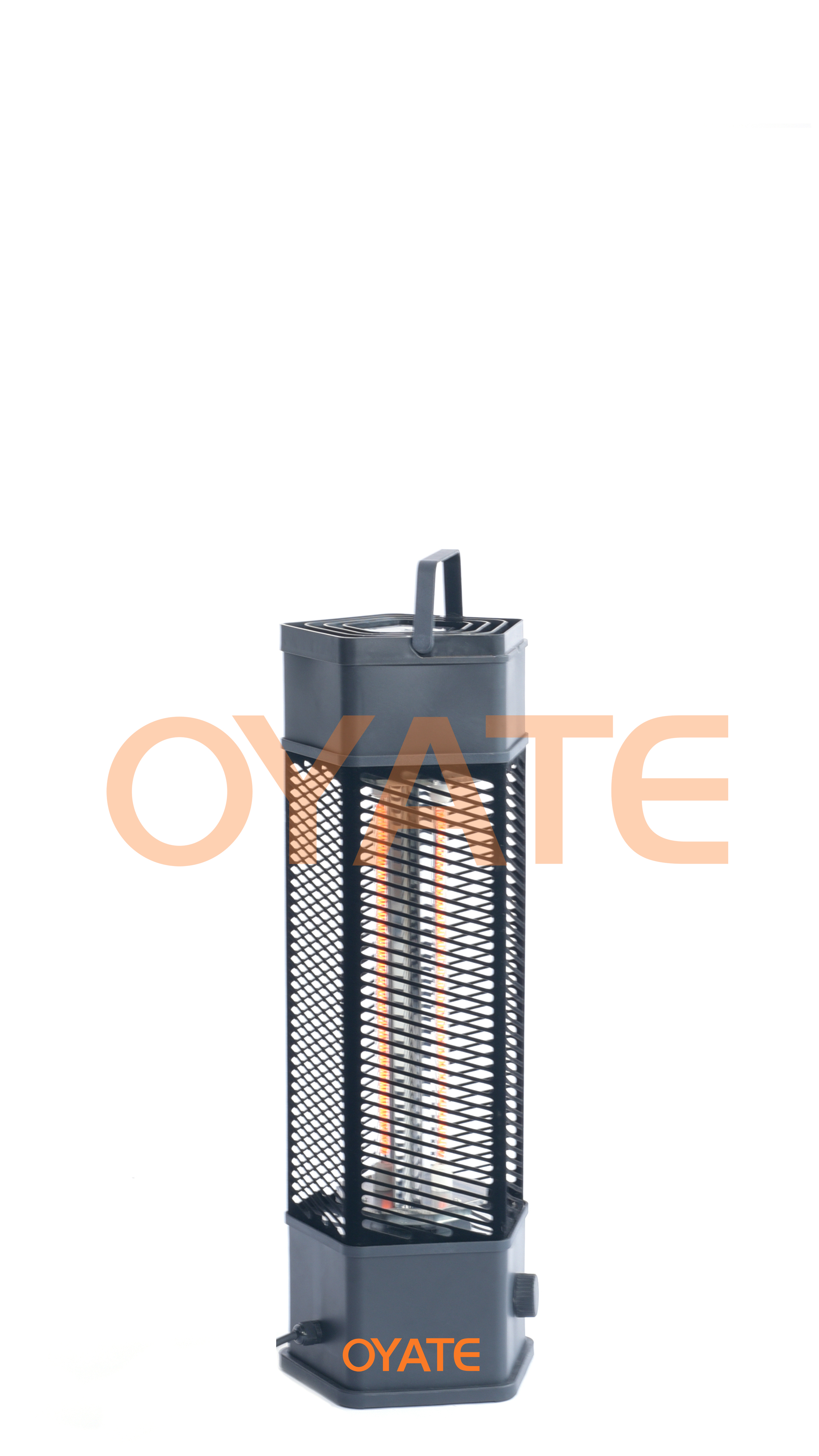
Why Most Bathroom Heaters Short Out (And How We Fixed It)
Bathrooms are a nightmare for electronics. You’ve got thick steam everywhere and intense, localized heat hitting the same spot over and over. In infrared heaters, there’s one spot that almost always fails: right where the lead wire hits the heating element. We call it “high-temperature aging.” Basically, the insulation gets brittle, cracks, and then—pop—you’ve got a direct short.
The problem with “standard” builds
Most heaters on the market just use basic heat-shrink or some cheap silicone. That stuff isn’t built for the constant heat spikes of an IR lamp. Here’s what happens: the heater kicks in, the temperature jumps, and those porous seals start to fail. Once the bathroom moisture seeps in, it creates a path for electricity to go where it shouldn’t. The insulation burns out, and the unit dies. We do things differently. We use a multi-stage potting compound that actually bonds to the quartz or ceramic housing. It creates a tight, airtight seal. No water gets in, and the heat spreads out evenly instead of cooking one single point.
Getting the materials right
You can’t just use off-the-shelf wiring if you want something to last. We spec out FEP and PFA polymers for the leads. These are heavy-duty materials that won’t melt or crack, even when they’re blasted with IR radiation. But the secret is in the expansion. If the sealing compound and the glass tube don’t expand and contract at the same rate, the seal will just snap during the first few times you turn the heater on. We make sure they move together.
One thing to watch out for
There is a trade-off, though. Because these seals are so tight, the wires are a bit stiffer. Don’t bend them at sharp angles during installation. If you force a tight kink in the wire, you might create a micro-crack in the seal. Just make sure your assembly team leaves enough room for a natural, gentle curve. It’s a small detail, but it’s the difference between a heater that dies in six months and one that actually does its job for years.