How we fix that “freezing bathroom” problem
Nobody likes stepping out of a shower or getting dressed in a changing room that feels like a walk-in freezer. It’s miserable. Most heaters try to warm up the air, but that takes forever. We do things differently. We use shortwave infrared (SWIR) technology. Instead of fighting with the air, these emitters send energy straight to you—or the surfaces around you—using electromagnetic radiation. The result? You feel the heat on your skin in seconds. No waiting. No shivering.
The secret sauce: How it actually works
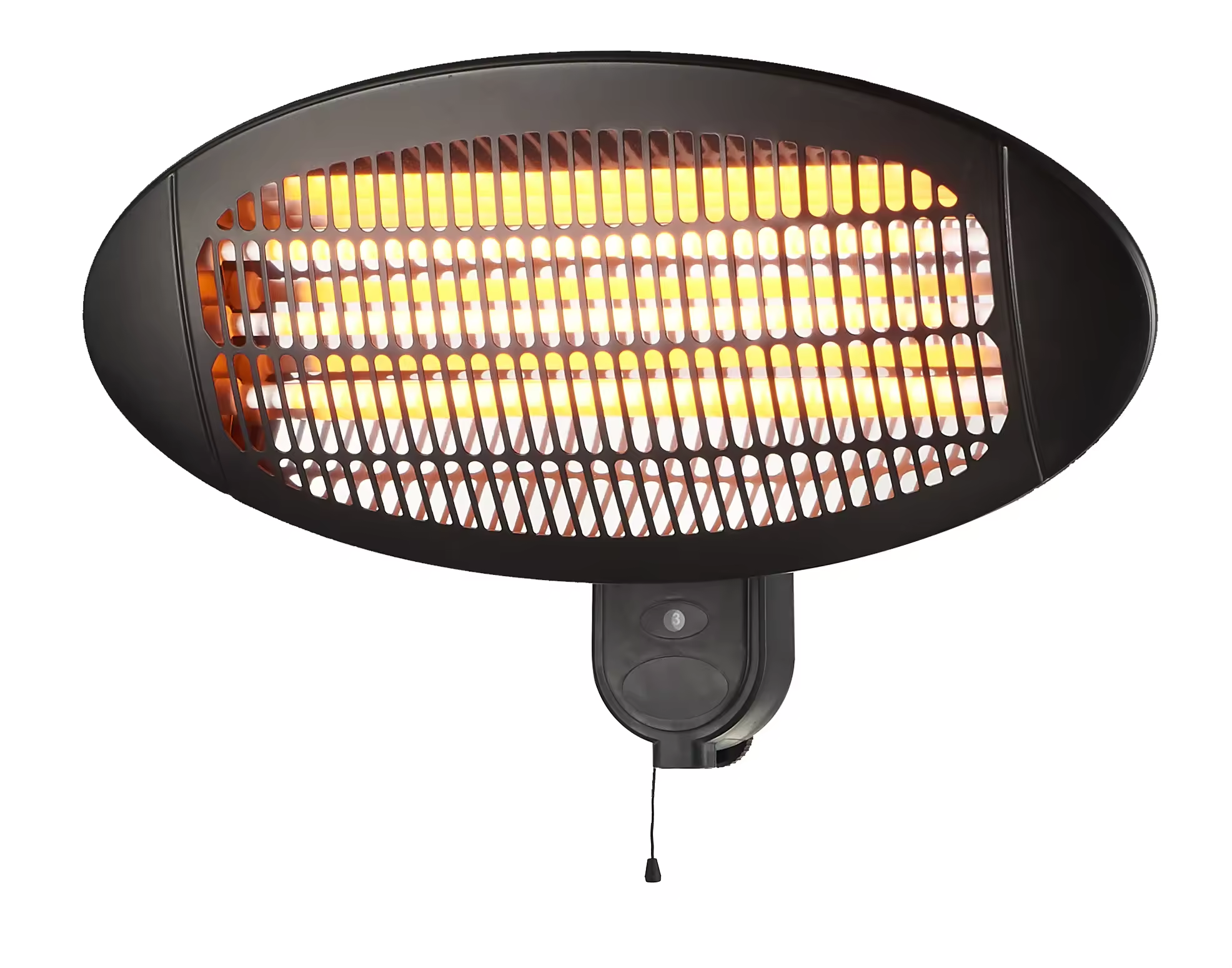
We build these units for raw power. Inside, there’s a tungsten filament tucked into a high-purity quartz tube. Once we flip the switch and the current hits that filament, it gets hot enough to push out radiation in a specific wavelength (between 0.76 and 2.5 $\mu$m). Here’s the cool part: human skin and bathroom tiles are great at absorbing this specific kind of energy. You don’t have to wait for the whole room to reach a certain temperature; you just feel an immediate, cozy warmth the moment you step in front of it.
Picking the right parts
The quartz tube is a big deal. If you use cheap glass, it’ll crack the second it heats up and cools down. We use high-grade quartz so the units can handle that thermal shock without breaking. When we put these behind mirrors, we add specialized reflectors. This pushes the heat forward toward the person and keeps it away from the mirror glass. It keeps the glass from getting too hot while making sure the user stays warm. As for the wiring, we keep it simple. We stick with standard R7s or Sk15 connectors. They’re sturdy, they stay put, and they won’t arc or rattle loose over time.
A few things to watch out for
High-wattage lamps are powerful, but they can be aggressive. You have to make sure your wiring and switches can handle that initial “surge” of power when the lights kick on. And be careful with placement. If you cram too many of these into a tiny changing stall, it can get way too hot, way too fast. To stop people from baking, we usually add a timer or a thermostat. The smartest way to do it? Use a sensor. That way, the heat only kicks in when someone is actually standing there. It’s efficient, and it keeps the experience comfortable.